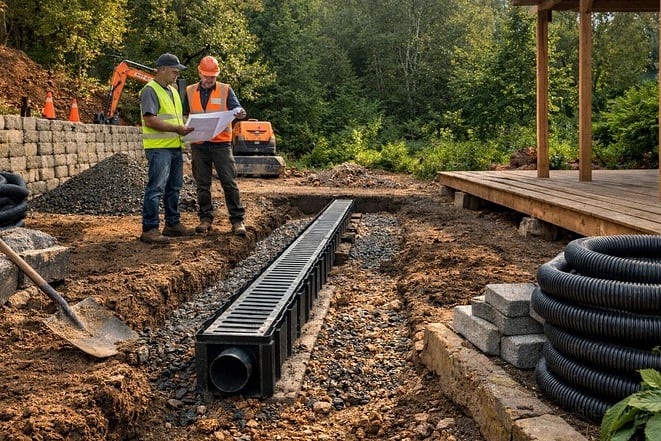
Outdoor areas can look straightforward on a plan. In practice, they involve levels, runoff, retaining, paving, planting, and underground services. At DrainPro, we often see rework happen when drainage is treated as a late-stage fix instead of an early design decision.
That problem is not limited to one region. DrainPro has expanded from Christchurch into a wider New Zealand footprint which includes drainlayers in Tauranga & the Bay of Plenty, and the same pattern shows up across many projects. Once surfaces are down and structures are in place, even small drainage changes can become expensive.
Drainage and layout need the same conversation
Builders already know that outdoor work is rarely just about appearance. A patio, path, lawn edge, retaining wall, or driveway changes how water moves across a site.
If those elements are designed without a drainage plan, the finished space can end up holding water or pushing it somewhere worse.
This is why drainage should be discussed at the same time as the site layout. That applies whether the initial plan comes from the owner, an architect, a builder, or a specialist landscaping design service.
My Landscapes in the Bay of Plenty, for example, presents landscape design alongside retaining walls, paving, decks, driveways, gazebos, and irrigation, which shows how closely these elements sit together during planning.
Rework usually starts with timing
The most common issue is simple. The outdoor layout gets approved first, then drainage is expected to fit around it later. By that point, the falls may be wrong, the channel drain may clash with a step, or the stormwater route may cut across finished work.
That creates pressure on every trade. The builder wants the slab or paving finished. The landscaper wants levels confirmed. The drainlayer is then left solving water movement after key decisions are already locked in.
Finished levels need to be settled early
Good coordination starts with finished levels. Before construction begins, the team should know how water will leave the entertaining area, where collection points will sit, and how nearby surfaces will fall. These decisions affect more than just drainage performance.
They also affect thresholds, steps, retaining heights, edging, and how outdoor features connect to the house.
A surface can look level to the eye and still hold water in the wrong place. That is why drainage planning belongs in the first round of layout decisions.
Retaining walls, paving, and driveways all change water movement
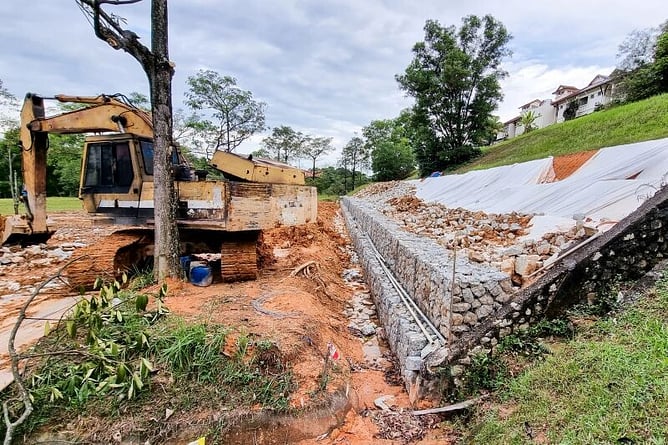
Retaining walls are a good example. They can create usable space, but they also interrupt natural flow paths. If drainage behind and around the wall is not resolved early, water pressure and runoff issues can appear later.
The same applies to paving and driveways. My Landscapes lists retaining walls, paving, driveways, lawns, and irrigation as part of its service mix, which reflects how often these features are planned together.
From a drainage point of view, each one changes how quickly water sheds, where it gathers, and what needs to happen below the surface.
Site conditions matter more than standard details
One standard detail will not suit every job. Soil type, slope, groundwater, and rainfall patterns all affect performance.
DrainPro’s own guidance on soil testing and septic design makes the same point from another angle: site conditions should shape the solution, not the other way around.
That matters for builders because outdoor areas often look similar on paper. On-site, they are not. A flat section, a sloping build, and a high-moisture property may all need different drainage responses, even if the surface finish is similar.
Trade sequencing is where projects either flow or stall
The easiest time to install drainage is before finished surfaces go down. Once concrete is poured, pavers are laid, or timber structures are fixed, the job becomes slower and more costly. What should have been a planned install becomes a workaround.
A better sequence is to confirm the layout, lock in levels, set the permanent features, and then complete the drainage before final finishes.
That gives builders, landscapers, and drainlayers one shared plan. It also reduces the risk of cutting into completed work later.
A few questions worth settling early
Where will surface water go in heavy rain? Will any hardscape push runoff toward the house or a low point?
Are retaining walls, steps, and garden edges leaving enough space for drainage elements to work properly?
It also helps to ask who owns the final site levels on the job. If that answer is vague, coordination usually suffers. Clear responsibility early on often prevents the most expensive mistakes later.
Final thoughts
Builders can avoid a lot of outdoor rework by treating drainage and layout as one conversation. That approach protects the programme, reduces variation costs, and gives every trade clearer direction.
Drainage should not be the last detail squeezed into the job. It should be part of the structure of the plan from the start.
Talk to us at Drainpro now, for all your drainage requirements.