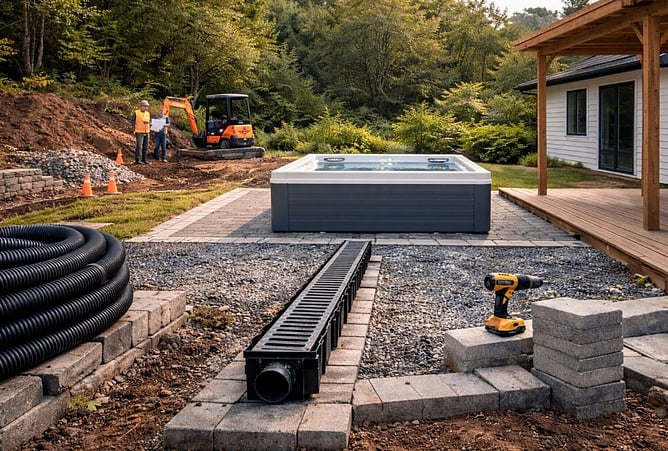
A spa area can look simple on paper. In reality, it affects site levels, hard surfaces, access, drainage, and service routes. At DrainPro, we often see outdoor projects run into avoidable problems because the site plan was settled before those details were worked through.
DrainPro’s nationwide service offering includes new-build and hard-surface drainage, as well as drainage design consultation, which is why this planning stage matters so much.
The biggest mistake is treating the spa as a product choice only. It is also a site-prep job. The base, the surrounding falls, and the way water leaves the area all need to be considered before installation day.
Start with the location, not the finish
Most homeowners begin with the look of the space. They picture the landscaping, the deck, the pavers, the privacy screen, or the entertaining area around it. That is understandable, but the site needs to work before it can look finished.
The first questions are practical. Is the site level enough? Is the surface strong enough? Can water move away from the base without pooling? Jet Spas’ own installation guidance highlights those same issues, including a level base, drainage away from the spa, access to the equipment side, and a practical electrical route.
A level base is not the same as a flat site
This is where some projects go off track. The spa itself needs a stable, level base. The surrounding area still needs enough fall to move water away from the unit.
Those two things have to work together. If the whole area is treated as flat, water can sit around the spa after rain or during routine use. Jet Spas’ a New Zealand spa pool retailer has guidance on spa surfaces and also notes the need for a level, stable surface and good drainage to prevent pooling around the base.
Think beyond the spa shell
A spa installation changes more than one small footprint. The moment you add steps, paving, screens, pergolas, retaining walls, or an outdoor shower, the site becomes more complex. Each element affects runoff and how the space should be drained.
That is why the surrounding layout should be planned early. A recessed corner, a wall beside the spa, or a raised entertaining zone can all trap water if the falls are wrong. Jet Spas specifically notes that recessed placements and retaining walls require careful consideration of runoff during heavy rain.
Product choices should not come before site planning
Many homeowners compare models before they confirm the ground conditions. That is normal, but the layout should still be tested early.
People researching swim spas and spa pools often focus on size, features, and finishes first, yet the more useful sequence is to align those choices with the base, drainage, and access requirements from the start.
Jet Spas’ buying and planning guides consistently place a level base and good drainage alongside the product decision itself.
Access matters more than many people expect
A spa can be difficult to position once fences, decks, or landscaping are complete. Access for delivery needs to be checked before surrounding work is locked in. That includes width, turning space, and whether structures will block the path.
Service access matters too. If the equipment side is boxed in too tightly, future maintenance becomes harder. Jet Spas’ site-prep guidance explicitly says the equipment side should remain accessible, which is a useful reminder during the planning stage.
Drainage should cover routine use, not just rainfall
Rain is only part of the picture. Spa areas also get splashed, washed down, and used in bare feet. Water on nearby pavers or concrete needs somewhere to go, especially around steps and entry points.
That is where hard surface drainage can make a real difference. DrainPro lists grated channels, stormwater pits, and filtration systems among its hard-surface drainage services, underscoring that outdoor living areas often need proper collection and discharge, not just a tidy finish.
Different New Zealand sites need different responses
There is no single layout that suits every property. A compact urban backyard behaves differently from a sloping section. A coastal site behaves differently from a sheltered inland one.
New Zealand homeowners also face varying rainfall patterns, ground conditions, and access limitations. That is why generic spacing and surface ideas only go so far.
DrainPro’s role in drainage design consultation is relevant here because site-specific planning is usually what prevents later rework.
Timing saves money
The cheapest time to solve drainage is before the finishes are complete. Once concrete is poured or pavers are laid, changes become slower and more expensive. Small mistakes then affect more than one trade.
A better process is simple. Confirm the location, set the permanent levels, check access, and map how water will leave the area before the final surface goes down.
That helps the builder, landscaper, electrician, and drainlayer work from the same plan.
Final thoughts
Installing a spa pool or swim spa should improve how an outdoor space works. It should not create ponding, awkward access, or expensive rework.
The best results usually come from treating the spa as part of the full site, not as a stand-alone product.
For homeowners, that means planning the base, drainage, and layout before the installation date is booked. When those pieces are handled early, the finished area is easier to build, easier to maintain, and far more enjoyable to use.
If you're thinking of installing a spa pool and need drainage put in beforehand, talk to someone from our Drainpro team. We have drainlayers in: