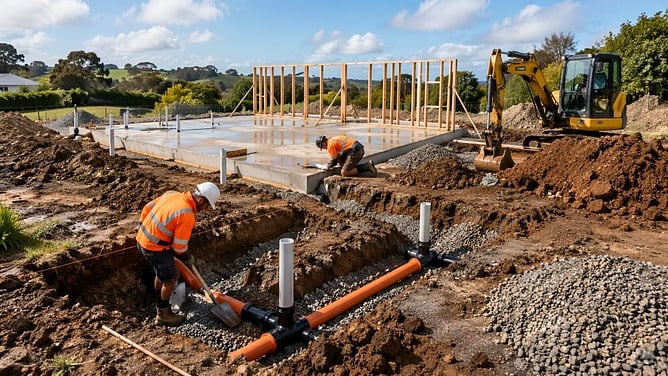
New home projects in Te Awamutu often move fast once the section is chosen. That can make early drainage decisions easy to delay. In our experience, that is when avoidable cost and rework start to creep in.
That matters even more in a growing part of Waipā. Waipā District Council says Te Awamutu and Kihikihi could support around 3,000 more homes by 2051. As more sections are developed, site planning needs to be clear from the start.
At DrainPro Hamilton & Waikato, we work with builders, homeowners, and developers across the region, including Te Awamutu. Our work includes new residential drainage, septic systems, stormwater solutions, and drainage design support. For us, the best jobs are the ones where drainage is planned before other site decisions are locked in.
Start with the section, not the build schedule
Every new build sits on a real section with real limits. The fall of the land, access to the rear, soil conditions, and available services all shape the drainage plan. Those details should be understood before trenching dates are discussed.
People looknig for new home builders in Te Awamutu often focus on design, layout, and finish first. That is normal. Builders and owners still need the section to work just as well below ground as it does above it.
A good plan starts by matching the build to the site. Whitechurch Construction talks about layout, orientation, natural light, and how a home performs on its section. Drainage should be part of that same early conversation, not a separate job added later.
Confirm stormwater and wastewater paths early
Drainage is not just about getting pipes in the ground. It is about knowing where water goes, how quickly it gets there, and what the site needs. If those answers come too late, other trades often need to stop and wait.
On some Te Awamutu sections, the answer is straightforward. On others, it is not. Urban sections, rear sites, and lifestyle blocks can all need different drainage thinking, especially when wastewater, stormwater, and levels do not line up neatly.
That is one reason we prefer early coordination with the builder and designer. Our Hamilton and Waikato team works with architects, builders, and engineers on drainage design consultation. Getting that input early helps the job move with fewer surprises.
Set finished levels before other trades lock them in
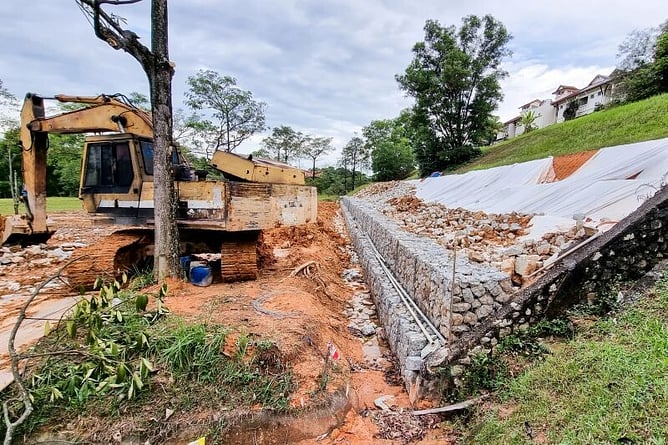
Finished levels affect almost everything on a new build. They shape slab height, falls around the home, driveway levels, paving transitions, and water movement across the site. Once those elements are fixed, simple drainage changes can become expensive.
This is especially important on tighter sections around Te Awamutu and nearby growth areas. It also matters on larger sections near Pirongia and across the wider Waipā district. Whitechurch’s own house and land material highlights access and buildability for good reason.
When levels are agreed early, other trades can follow a clearer plan. When they are not, the job often doubles back on itself. That can mean recutting, repaving, extra excavation, or delayed handover.
Check access before the site gets crowded
Drainlaying works best when machinery access is still simple. Once framing, fencing, retaining, and materials fill the site, small tasks can take much longer. That is why access should be checked before the build gets busy.
This applies to trenching and backfilling, but also to deliveries and inspections. At Drainpro we know that efficient installation can reduce downtime and keep the site ready for the next stage. That only happens when the sequence is planned properly.
Rear sections and narrow entries need extra care. So do sites where concrete, decking, or landscaping will close off working space later. A few early access decisions can protect the whole timeline.
Te Awamutu builds are not all the same
New builds in Waipā do not all follow one pattern. Some are compact town sections, either flat or sloped. Others are larger lifestyle sites where wastewater treatment needs a different approach. DrainPro’s Waikato team handles both new residential drainage and aerated wastewater systems for rural properties.
That makes early site review even more important. The drainage plan for a standard town build will not always suit a larger block outside town. Te Awamutu, Kihikihi, Pirongia, and the surrounding district all bring slightly different site pressures.
Keep the build moving by planning sooner
Most drainage delays do not come from one major failure. They come from several small decisions made too late. A missed level, blocked access route, or late compliance step can slow the whole build.
The best approach is simple. Review the section early, confirm the drainage path, lock in levels, and coordinate timing before the site fills up. That gives builders a smoother programme and owners fewer last-minute costs.
For Te Awamutu new builds, drainage should be part of the first plan, not the last fix. That is how projects stay practical, compliant, and ready for the next stage. In a growing district, that early thinking pays off every time.
Talk to us now at DrainPro if you're planning a new build, we can sort your drainage when you need it sorted.