Drainage projects often look straightforward on paper. The design is approved, the route is mapped, and the work scope seems clear. On-site, though, access and equipment planning can affect the job just as much as the drainage layout itself.
At DrainPro Tauranga & Bay of Plenty, we work on drainage and wastewater projects across Tauranga, Rotorua, Whakatāne, and the wider region. Our services include stormwater systems, new drainage installations, infrastructure work, hard-surface drainage, and subdivision projects.
That kind of work depends on more than good pipework. It also depends on how the site is organised from the start.
Drainage work needs room to move
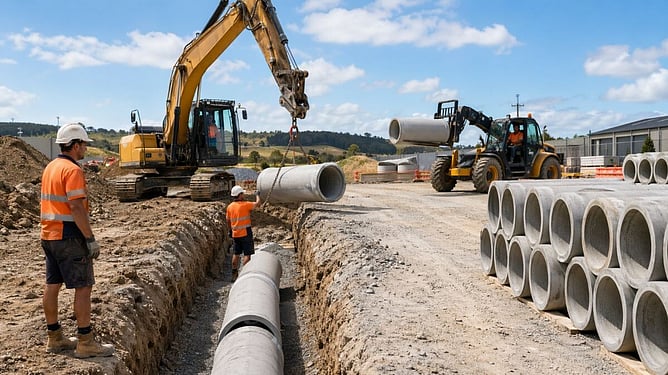
Drainage projects involve more than digging a trench and laying pipe. Materials need to arrive in the right order, machinery needs clear movement paths, spoil needs to be handled, and other trades still need to work around the site. If access is tight or staging is poorly planned, even a simple job can slow down quickly.
This becomes even more important on commercial sites, subdivisions, and infrastructure work. Those environments often involve multiple contractors, changing priorities, and limited working space. If access is not planned properly, delays can ripple through the whole programme.
Access affects sequencing from day one
Good drainage sequencing starts with a practical question. How will people, plant, and materials get where they need to go. That sounds basic, but it shapes a lot of the job.
Pipe deliveries, storage areas, trench access, reinstatement work, and safety separation all depend on that early answer.
It is also one reason we value early coordination with builders, developers, and site managers. A drainage plan may be technically sound, but it still needs to reflect the site's actual movement.
When access routes are blocked too early or when working zones are squeezed by other activity, productivity usually drops.
Equipment planning supports safer and faster work
Equipment planning is not only about big machinery. It also includes how materials are unloaded, shifted, stored, and brought into active work zones.
On larger sites, that process can affect both safety and timing. If basic materials handling is inefficient, crews lose time on tasks that should be simple.
This is where the wider site-logistics picture matters. On some commercial projects, builders and contractors may also be organising forklift hire in Tauranga or related materials-handling support through providers such as Centra Forklifts Tauranga, depending on the site type and the equipment already in place.
That kind of support sits outside drainage itself, but it can still influence how smoothly the broader project runs.
Tight sites create avoidable pressure
Tight or busy sites increase the need for planning. Access ways may be shared, turning space may be limited, and storage areas can disappear fast once deliveries begin.
A site that looks manageable early in the programme can become much harder to work in once structures, paving, or other services start closing in.
This is especially true in urban commercial work and staged developments around Tauranga and the wider Bay of Plenty.
Drainage contractors often need to work around concrete crews, civil teams, service installers, and general site traffic. Without clear access planning, even basic movement becomes harder than it should be.
Materials handling affects the quality of the programme
It is easy to think of materials handling as someone else’s problem. On real sites, it affects the programme for everyone. If pipes, fittings, or support materials are left in the wrong place, crews spend time shifting them instead of installing them.
If deliveries arrive without a proper unloading plan, site flow is disrupted before the work even begins.
That is why site planning should include more than the drainage route itself. Working zones, laydown areas, access lanes, and equipment needs all deserve attention early. They help protect the schedule and make the drainage work easier to complete efficiently.
Better access planning helps everyone on site
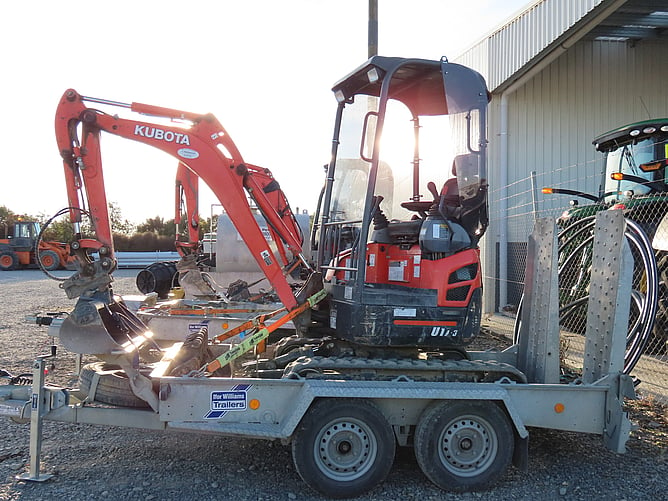
When access and equipment planning are done properly, the benefits spread beyond the drainage contractor. Builders get fewer disruptions, site managers have better control of traffic and staging, and other trades can work around the programme with less friction. Good planning improves more than one scope of work.
For DrainPro, that matters because drainage is often one part of a much larger job. We can install the right system, but the site still needs to support efficient delivery of the work.
On more complex projects, that practical coordination is often what separates a smooth programme from a frustrating one.
Strong drainage projects start with practical site thinking
For builders, developers, and commercial clients, the lesson is simple. Good drainage design is only part of the job. Site access, movement, unloading, storage, and equipment planning all shape how the work actually happens.
That is why site access and equipment planning matter so much on drainage projects. When those details are considered early, the whole job tends to run more safely, more efficiently, and with fewer delays once construction is underway.
Need help with drainage ? Talk to us now at DrainPro.