
Commercial Water Treatment PlantsSuncoast Waste Water Management has developed and engineered the range of Ozzi Kleen custom designed packaged on-site sewage treatment systems that have enhanced the quality and dependability of waste water treatment. The key to Ozzi Kleen’s high performance is the cyclic control process which has been specifically developed to make sewage treatment more reliable and energy efficient.
Commercial Wastewater Treatment Systems
Predictable Systems for Faster Installations
Commercial jobs move faster when the treatment side is predictable. You get the right system type and sizing support, so you can commission sooner, avoid scope gaps, and hand over a site that runs reliably.
If you’re comparing options for commercial sites in New Zealand, start here.
Compare Wastewater Systems
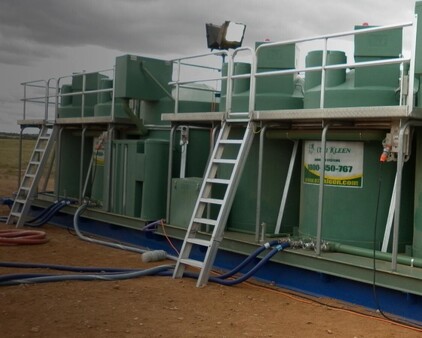
Transportable Treatment PlantsOur complete plug and play skid mounted sewage treatment system range offers standard products treating from 2,000 – 6,000 litres of sewage and waste water i.e. toilets, bathrooms, laundries and kitchens. These systems are regularly used on smaller mining accommodation camps and include our SK10, SK20 & SK25 models of skid mounted treatment plants. All standard systems can be made to meet specific site requirements and are available to buy or rent.
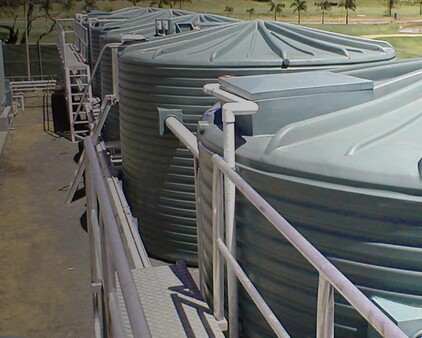
Permanent Poly Tank Sewage Treatment SystemsThe Ozzi Kleen packaged poly tank range is manufactured under an annually audited quality assured process in our factory located on the Sunshine Coast, Queensland. The Ozzi Kleen packaged poly tank range is available in many configurations and can also cater for higher Biological Oxygen Demand (BOD) and hydraulic loadings.
| Specification | Commercial Water Treatment Tanks | Transportable Tanks | Permanent Tanks |
|---|---|---|---|
| Typical Use | Commercial sites with direct water discharge requirements | Temporary or relocatable sites | Permanent commercial installations |
| Installation Type | On-site installation | Pre-assembled, transportable unit | Fully installed, fixed system |
| Tank Configuration | Single or multi-tank system | Single integrated tank | Single or multi-tank system |
| Site Preparation | Moderate | Minimal | Higher (excavation and foundations) |
| Relocatable | No | Yes | No |
| Maintenance Access | Standard service access | Easy access via integrated housing | Standard service access |
| Compliance Ready | Yes (site-specific design) | Yes | Yes (site-specific design) |
| Best For | Permanent water discharge applications | Fast deployment and flexibility | Long-term, high-demand sites |
What makes Ozzi Kleen practical on commercial jobs
Pre-engineered system packages
Packaged, pre-engineered systems mean you’re not redesigning or re-specifying from scratch on every commercial job.
Predictable plug-and-play setup
A plug-and-play approach on many sites makes installation and commissioning more consistent and easier to plan.
Cyclic control for variable loads
The cyclic control process helps the system handle fluctuating flows and peak demand without manual intervention.
Flexible installation formats
Transportable and permanent system options let you match the solution to the site conditions and project timeframe.
Designed for future capacity
Capacity planning allows you to size correctly now while accommodating future expansion if required.
Local NZ supply and support
DrainPro provides New Zealand-based supply, documentation, and practical guidance through installation and handover.
When the treatment side drags, your whole job drags
It’s frustrating when you’re ready to move, but the treatment plant becomes the thing holding up the project. You’re trying to protect your timeline, avoid rework, and hand over something the site can run without constant babysitting.
You get help through DrainPro to choose the right category, size it with confidence, and keep the job moving.
What you get when you enquire
You shouldn’t have to chase basics just to scope the job properly.
When you request specs and sizing help, you can get:
The right category recommendation (transportable versus permanent)
Sizing guidance based on expected load and peak periods
Documentation to support quoting and planning
Pricing and lead time guidance
Your next step
You don’t need a long back-and-forth to work out if this fits. You stay on programme, and you hand over a system the site can run reliably.
1
Send the site basics
Location, expected occupancy, peak periods, and whether the site is temporary or permanent.
2
Get a recommended system type and sizing
So your scope and quote are built on the right assumptions.
3
Confirm inclusions, pricing, and delivery plan
Then you can place an order request when the project is ready.
Your questions answered
What do you need from me to recommend a system?
Site location, estimated occupancy range, peak periods, and any known discharge/disposal requirements. If kitchens, laundries, or higher loads are involved, include that too.
Is this the same as a septic tank?
Not always. Many commercial sites need a treatment plant approach rather than a basic septic option. If you’re comparing commercial plants with septic tank systems New Zealand suppliers offer, start with occupancy and peak flow. That usually makes the right category obvious.
What does PLC control mean on site?
A programmable logic controller (PLC) runs the treatment cycles automatically. For you, that usually means more consistent operation and clearer fault finding if something goes wrong.
Can you make capacity bigger later?
Often, yes but it needs to be planned properly at the start. If expansion is likely, flag it early so sizing and configuration can allow for growth.


location_on 19 John Morten Place, Rolleston, Christchurch 7677
phone_in_talk 03 342 1278
WE'RE SOCIAL