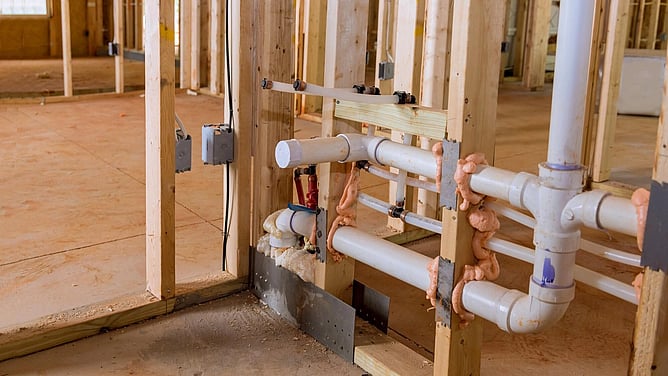
New build projects depend on more than good design and reliable trades. They also depend on how well the hidden services are planned before the build gets too far ahead.
Plumbing and drainage are two of the clearest examples. When they are treated as separate tasks, rework becomes more likely.
At DrainPro, we work across multiple New Zealand regions on new-build drainage, septic tank installation, stormwater systems, wastewater solutions, and infrastructure work.
A lot of that sits below ground, but it still affects the sequence, compliance, and day-to-day progress of the build above it. That is why we see so much value in early coordination.
Plumbing and Drainage are Linked From the Start
It is easy to think of plumbing and drainage as different parts of the job. One brings water in and supports fixtures. The other takes wastewater and stormwater away. On site, though, they are closely connected. Their routes, access needs, timing, and compliance requirements can all overlap.
That is especially true on new builds where services need to be locked in before slabs, hard surfaces, driveways, or landscaping begin to limit flexibility. When one part of the service layout changes late, the rest of the build can feel that impact as well.
Early Planning Reduces Avoidable Site Problems
One of the biggest causes of project frustration is not always poor workmanship. Often, it is poor sequencing. Drainage may be planned correctly in principle, but access is no longer ideal once other parts of the site are underway.
Plumbing routes may be simple on paper, but harder to accommodate once site works have moved on.
That is why early planning matters. DrainPro positions its work around helping builders and homeowners manage drainage design, compliance, and installation in a way that supports the wider programme.
When underground service decisions are made early, the rest of the build usually has a clearer path.
New Builds Now Carry More Service Complexity
Modern homes often include more infrastructure than older builds. Wastewater requirements, stormwater management, hot water systems, gas services, heating, and smart-ready upgrades all need room in the plan.
That added complexity makes coordinated service thinking more important than it used to be.
Paramount Plumbing & Gas is one example of a Wellington Plumber and how broad that service picture can be. Its Wellington site covers plumbing, gas fitting, hot water systems, central heating, and new builds.
That is useful context because it reflects a wider industry reality. Builders are often coordinating several linked service categories at once, even when those categories are delivered by different specialists.
Compliance and Timing Are Easier to Manage Together
DrainPro’s service pages make clear that drainage is not just about installing pipework. Design support, paperwork, and compliance all form part of the process.
That has a practical effect on build timing. If drainage is left too late, paperwork and inspections can end up shaping the programme instead of supporting it.
Plumbing projects can create similar timing pressure. A company like Paramount, for example, also operates across plumbing, gas fitting, and hot water systems.
That is a reminder that service coordination is often wider than one contractor or one trade. The more clearly those parts are lined up early, the less pressure the build tends to carry later.
Builders Save Time When the Hidden Work is Treated as One Plan
The visible parts of a new build usually get the attention first. Cladding, kitchens, bathrooms, and finishes are easy to picture. The hidden work is different. It only draws attention when something clashes, gets delayed, or needs to be redone.
This is why builders benefit from treating plumbing and drainage as one connected part of the build plan. That does not mean every service needs to be installed at the same time. It means the layout, sequencing, and practical requirements should be understood together while the build is still flexible.
Better Coordination Supports Better Long-Term Performance
Early coordination does more than protect the build schedule. It also supports the long-term performance of the property.
Wastewater systems, stormwater routes, hot water supply, and service access all affect how the home functions after handover. These are not details that homeowners want to revisit once the build is finished.
This is an inference based on both companies’ service mix and planning emphasis, but it is a practical one. When plumbing and drainage are coordinated early, the result is usually simpler to install, easier to inspect, and less likely to create downstream problems.
Smarter New Builds Start Below the Surface
For builders and homeowners, the takeaway is straightforward. Plumbing and drainage should not be planned in isolation. They are different systems, but they work best when they are considered as part of the same build strategy.
That is why new build projects work better when plumbing and drainage are planned together. The earlier those hidden services are aligned, the easier it is to keep the build moving and the better the finished result tends to be.
Talk to our team at DrainPro for all your drainage and septic tank needs.