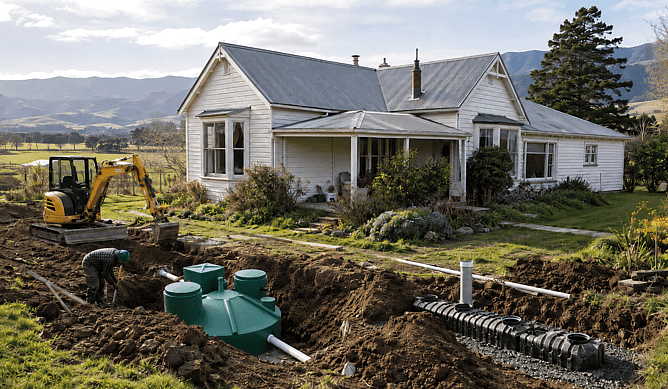
Older rural homes around Christchurch and wider Canterbury often come with plenty of character, established gardens, larger sections, and the space that makes country living so appealing.
But they can also come with older wastewater systems that were installed decades ago, often for a smaller household, different water usage habits, and less demanding compliance expectations.
For homes that are not connected to a council wastewater network, the septic system is one of the most important parts of the property. When it is working well, it is easy to forget about.
When it starts failing, it can quickly become stressful, inconvenient, unpleasant, and expensive if the underlying issue is ignored.
Septic Tank Replacement in Christchurch is not always as simple as swapping one tank for another. Older rural homes often need a proper site assessment, an understanding of the existing drainage layout, soil conditions, disposal field performance, household water use, and current compliance requirements.
The right solution depends on the property as a whole, not just the age of the tank.
Talk to our Christchurch drainlaying team:
Phone: 021 212 7885
Email: ray@drainpro.co.nz
Why Older Rural Homes Often Need Septic System Replacement
Many older septic systems around Christchurch were designed for the way homes were used at the time they were built.
A rural home that once had one bathroom, a modest laundry, and fewer occupants may now have multiple bathrooms, a larger kitchen, a second living area, a sleepout, or regular guests. Every one of those changes can increase the amount of wastewater moving through the system.
Over time, tanks can crack, seals can fail, pipework can shift, and disposal fields can become tired or saturated. Even a system that has been maintained reasonably well may eventually reach the point where repairs are no longer the most practical long-term option.
Older concrete tanks, outdated pipe materials, poor access points, and undersized disposal areas can all make the system harder to maintain and less reliable.
A failing septic system is not just a drainage issue. It can affect the comfort of the home, the use of the section, the health of the surrounding environment, and the future value of the property.
That is why we always look at the full picture before recommending repair, replacement, or an upgraded wastewater treatment system.
Signs Your Septic System May Be Ready for Replacement
One slow drain does not always mean the septic tank needs replacing. It may be a localised blockage or a simple pipe issue. But when problems keep coming back, it is worth taking a closer look.
Common signs of a struggling septic system include slow-draining sinks, showers, baths, or toilets. You may notice gurgling sounds through the pipes, recurring blockages, or wastewater backing up during heavy use. These symptoms can point to problems in the pipework, the tank, or the disposal field.
Odours are another warning sign. A properly functioning septic system should not create strong smells around the house, tank, or disposal area. If unpleasant smells are becoming more noticeable, wastewater may not be moving, treating, or dispersing as it should.
The ground around the disposal field can also tell you a lot. Wet, spongy, or unusually green patches of lawn may suggest effluent is sitting too close to the surface. In rural areas, this can sometimes be mistaken for a general drainage problem, especially after wet weather. However, if the same area stays damp or smelly, it needs to be investigated.
Another sign is the need for more frequent pump-outs. Septic tanks do need maintenance, and regular servicing is part of owning a rural wastewater system.
But if the tank seems to fill too quickly, or the same issues return soon after pumping, the system may be undersized, damaged, or no longer suitable for the home.
Repair or Replace? How We Assess the Right Option
Not every older septic system needs full replacement. In some cases, a targeted repair may solve the issue. A damaged pipe, blocked line, faulty pump, or isolated access problem may be able to be fixed without replacing the whole system. The key is knowing exactly what has failed.
We start by assessing the site and the existing system. That means looking at the tank, pipework, drainage layout, disposal field, access, ground conditions, and the way the household uses water.
Rural properties can be very different from one another, even when they are only a few kilometres apart. Soil conditions, slope, groundwater, tree roots, driveways, paddocks, outbuildings, and section layout can all affect the best solution.
Sometimes the tank itself is still serviceable, but the disposal field has failed. In other cases, the tank is too damaged, too small, or too outdated to justify further repairs.
There are also situations where a system may still function day to day, but it no longer meets the needs of the home or the expectations for a compliant wastewater setup.
Working with experienced Drainlayers Christchurch homeowners trust makes a real difference here. A quick patch might get wastewater moving again for a short time, but it may not solve the underlying problem.
We prefer to give practical advice based on what will work safely and reliably over the long term.
What Septic Tank Replacement in Christchurch Usually Involves
A septic tank replacement starts with understanding the property. Christchurch and Canterbury homes can vary widely, from lifestyle blocks on open rural land to older homes on semi-rural sections with established planting and limited access. Before any replacement is planned, the site needs to be properly assessed.
The first step is usually an inspection of the existing system. We look at where the tank is positioned, how wastewater reaches it, where it discharges, and whether the disposal field is still performing.
Soil and soakage conditions are important because the ground must be able to manage the treated wastewater safely. DrainPro’s Christchurch service focuses on the design, engineering, and installation of septic tanks and wastewater treatment systems across Christchurch and Canterbury, including upgrades to existing setups.
The next step is choosing the right type of system. Some properties may suit a standard septic tank setup, while others may need a more advanced wastewater treatment system.
DrainPro designs, supplies, and installs Ozzi Kleen advanced aerated wastewater treatment plants for rural and commercial properties across several New Zealand regions, including Christchurch.
Once the right system is selected, the design and paperwork need to be managed properly. Septic tank replacement often involves more than excavation and installation.
There may be engineering, documentation, council compliance, and final sign-off requirements. What's more, our Christchurch team manages design, engineering, council compliance, and installation for septic tanks and wastewater treatment systems.
After the planning stage, the installation can be completed. This may involve decommissioning or removing the old system, excavating for the new tank, installing new pipework, creating or upgrading the disposal field, connecting the system to the home, and reinstating the ground as neatly as possible.
A well-managed replacement should leave the property with a wastewater system that is better suited to the home, the land, and future use.
Want to know more? Talk to our Christchurch drainlaying team:
Phone: 021 212 7885
Email: ray@drainpro.co.nz
Why Christchurch and Canterbury Sites Need Local Knowledge
Local experience matters with septic systems because the right answer depends heavily on site conditions. Canterbury properties can have very different soils, drainage behaviour, and access challenges. A design that works well on one property may not be suitable for another.
Soil type is one of the biggest factors. Some soils drain freely, while others hold moisture for longer. That affects the size, position, and type of disposal field required.
Groundwater levels, nearby waterways, slopes, and available land area can also influence the design. On smaller rural sections, it may take careful planning to find the right location for a compliant, practical system.
Access is another factor that is easy to underestimate. Older rural homes often have mature gardens, narrow driveways, fences, sheds, stock areas, trees, and other features that affect how machinery can reach the work area.
Planning access early helps reduce disruption and makes the installation smoother.
DrainPro works across Christchurch and Canterbury locations including Christchurch, Rolleston, Akaroa, Darfield, Methven, Ashburton, Rangiora, Oxford, Amberley, Waipara, Culverden, and Cheviot.
That local coverage matters because septic tank replacement is rarely a one-size-fits-all job. It needs to be designed around the land as well as the house.
Septic Tank Replacement Christchurch: What Can Affect the Cost?
The cost of septic tank replacement in Christchurch depends on the system, the site, and the level of work required. A straightforward replacement on a property with good access and suitable ground conditions may be simpler than a project where the old system has failed badly, the disposal field needs to be redesigned, or the site has limited space.
The type of system is one of the main cost factors. A standard septic tank and a modern aerated wastewater treatment system have different design, installation, and maintenance requirements.
Advanced systems may be the better option where the property needs a higher level of wastewater treatment, where the site is more sensitive, or where a traditional setup is not suitable.
The disposal field also has a major impact. If the existing disposal area has failed, is too small, or is no longer appropriate, it may need to be replaced or redesigned.
The amount of land available, the soil conditions, the distance from the home, and the presence of trees, driveways, or boundaries can all affect the final layout.
Excavation and access can also change the scope of the job. Deep excavation, difficult ground, old pipework, tight access, and the need to cart away spoil can all influence the time and machinery required.
In our residential drainlaying information, we note that tank installs can involve spoil removal, with tank installations sometimes producing significant volumes of soil.
Compliance and documentation are also part of doing the job properly. A septic system is not something that should be installed on guesswork. It needs to be designed, documented, and completed to the right standard so the homeowner has confidence in the result.
Repair or Replace? How We Assess the Right Option
Not every older septic system needs full replacement. In some cases, a targeted repair may solve the issue. A damaged pipe, blocked line, faulty pump, or isolated access problem may be able to be fixed without replacing the whole system. The key is knowing exactly what has failed.
We start by assessing the site and the existing system. That means looking at the tank, pipework, drainage layout, disposal field, access, ground conditions, and the way the household uses water.
Rural properties can be very different from one another, even when they are only a few kilometres apart. Soil conditions, slope, groundwater, tree roots, driveways, paddocks, outbuildings, and section layout can all affect the best solution.
Sometimes the tank itself is still serviceable, but the disposal field has failed. In other cases, the tank is too damaged, too small, or too outdated to justify further repairs.
There are also situations where a system may still function day-to-day, but it no longer meets the needs of the home or the expectations for a compliant wastewater system.
Working with experienced drainlayers Christchurch homeowners trust makes a real difference here. A quick patch might get wastewater moving again for a short time, but it may not solve the underlying problem. We prefer to give practical advice based on what will work safely and reliably over the long term.
Modern Wastewater Options for Older Rural Homes
For older rural homes, replacing a septic system can be an opportunity to move to a more efficient and suitable wastewater solution. The right system depends on the property, but there are a few common options homeowners may come across.
A standard septic tank may still be suitable for some rural properties. These systems separate solids and liquids, allowing wastewater to flow into a disposal field where it is further treated and absorbed through the soil. They rely heavily on suitable ground conditions and correct design.
Aerated wastewater treatment systems provide a higher level of treatment than a basic septic tank. These systems use air and biological treatment processes to improve the quality of treated wastewater before it is dispersed.
They can be useful for rural and commercial properties where a more advanced treatment approach is needed. DrainPro specialises in designing, supplying, and installing advanced aerated wastewater treatment plants for rural and commercial properties.
Pumped systems may be used where gravity alone cannot move wastewater to the right location. This can be relevant on sloping land, large properties, or sections where the best disposal area sits away from the house.
Drip lines and other dispersal options may also be considered depending on the site and system design.
The most important point is that the tank is only one part of the system. A reliable wastewater setup depends on the tank, pipework, treatment method, pumps if required, and the final dispersal area all working together.
How to Prepare for a Septic System Replacement
If you think your older septic system may need replacing, the best first step is to gather any information you already have. Old drainage plans, council records, property documents, previous maintenance invoices, and pump-out history can all be helpful. Even if the information is incomplete, it can give us a better starting point.
It is also worth thinking about how the home is used now and how it may be used in the future. If you are planning renovations, adding bedrooms, creating a sleepout, upgrading bathrooms, or preparing the property for sale, those plans may affect the wastewater system design.
A replacement should not only solve today’s problem. It should support the property’s future needs as well.
Access is another useful thing to consider. Clearing the area around the tank, moving vehicles, identifying underground services, and noting any sensitive landscaping can help the process run more smoothly.
We know many older rural homes have established gardens and outdoor spaces that matter to the homeowner, so early planning helps reduce unnecessary disruption.
It is also sensible to start early if you are renovating, building, or selling. Septic system replacement can involve assessment, design, approvals, materials, installation, and final documentation. Leaving it until the last minute can create pressure, especially if the system is already showing signs of failure.
Why Work With Certified Drainlayers Christchurch Homeowners Can Trust?
Septic system replacement is not a job to leave to guesswork. It involves wastewater, drainage, excavation, compliance, environmental protection, and long-term property performance. Getting it right matters.
As certified drainlayers, we bring practical site knowledge and technical understanding to the process. We assess the property, explain the options, and design around the conditions we find. That means we are not just looking at the tank. We are looking at how the entire wastewater system will function once installed.
We also understand that homeowners want clear communication. Septic issues can feel overwhelming, especially when there is uncertainty around cost, compliance, and what work is actually required. Our role is to make the process easier to understand, from the first assessment through to installation and sign-off.
DrainPro’s wider service approach includes drainage and septic tank solutions across New Zealand, with Christchurch as one of its branch regions and a head office presence in Rolleston.
For rural Christchurch homeowners, that means working with a team that understands septic tank installation, wastewater systems, and the practical realities of local sites.
FAQs About Septic System Replacement in Christchurch
How do I know if my septic tank needs replacing?
You may need a replacement if you are dealing with recurring blockages, bad smells, soggy ground, wastewater surfacing, frequent pump-outs, or visible tank damage. The only way to know for sure is to have the system assessed properly, because the issue may be in the tank, pipework, disposal field, or overall design.
Can an old septic tank be repaired instead of replaced?
Yes, sometimes. If the problem is isolated, a repair may be enough. However, if the tank is structurally damaged, the disposal field has failed, or the system is too small for the home, replacement may be the better long-term option.
Do I need council approval for septic tank replacement in Christchurch?
In many cases, septic tank replacement involves design, documentation, and compliance requirements. The exact process depends on the property and the nature of the work. We help homeowners understand what is required before work begins.
What type of septic system is best for a rural Christchurch property?
The best system depends on soil conditions, household size, section layout, access, future property plans, and compliance requirements. Some homes may suit a standard septic tank, while others may need an aerated wastewater treatment system or a more tailored design.
How long does septic tank replacement take?
The physical installation may be completed relatively quickly once everything is planned and approved, but the full timeline depends on assessment, system design, approvals, weather, site access, and materials. A proper upfront process helps avoid delays and surprises.
Get the Right Septic Replacement Advice Before You Dig
Replacing a septic system at an older rural home is a big decision, but it can also be a valuable opportunity to improve reliability, protect the property, and bring the wastewater setup in line with how the home is used today.
The key is to avoid guessing. Slow drains, odours, wet ground, and frequent pump-outs are all signs that something needs attention, but the right solution depends on what is happening beneath the surface.
A proper assessment gives you clarity before you commit to repairs or replacement.
If your rural septic system is showing signs of age, we can assess the site, explain your options, and manage the replacement process from design through to installation.
Talk to our Christchurch team about Septic Tank Replacement in Christchurch as well as wastewater solutions designed around your home, your land, and your long-term needs.
Phone: 021 212 7885
Email: ray@drainpro.co.nz
We have branches in Auckland, Hamilton and Waikato, Tauranga and The Bay of Plenty, Central Otago as well as Christchurch.