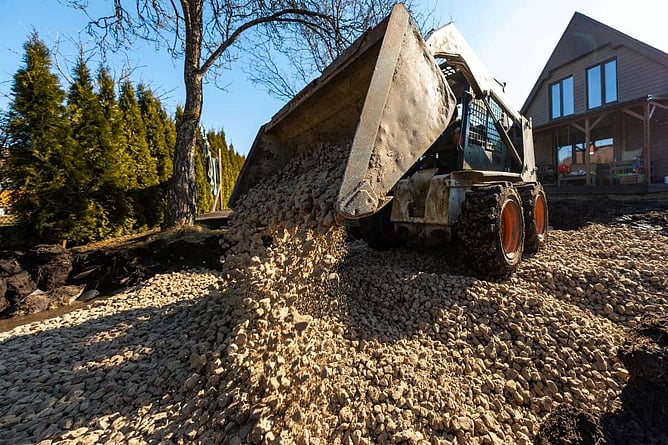
When you’re building a new home or developing a property in Waikato, there are plenty of jobs happening outside the house itself. Drainage needs to go in, driveways have to be formed, fences need installing, and landscaping eventually brings everything together.
The order these jobs happen in matters more than many property owners realise.
Get it right, and each trade can move through the site efficiently. Get it wrong, and you can end up digging through finished areas, restricting machinery access or paying to redo work that was already complete.
For any property development in Waikato, a little planning at the start can make the later stages much easier.
Start with what needs to go underground
Drainage should be considered early because most of the finished product will eventually be hidden below ground.
On a new build, this can include sewer and stormwater lines, downpipe connections, sumps, soak pits and other drainage infrastructure. Rural and lifestyle properties may also require septic tanks or wastewater treatment systems.
Once concrete, fences, gardens and other permanent features are installed above these areas, making changes becomes much harder.
That’s why confirming the drainage layout before exterior finishing begins is so important.
At DrainPro, we work with homeowners, builders and developers throughout the region on new-build drainage, stormwater and wastewater systems. Our Hamilton and Waikato drainlayers can work alongside builders, engineers and other trades to make sure drainage is positioned correctly before the site starts filling up.
Keep machinery access open while you can
A bare building site might look spacious at the start of a project. That can change quickly.
Building materials arrive, scaffolding goes up, driveways begin taking shape and sections of the property become harder to reach.
Drainlaying for Hamilton projects usually requires excavation equipment, pipe deliveries and access for backfilling. Septic tank installations and wastewater systems can need even more room for machinery.
This is particularly worth thinking about on rear sections, compact sites around Hamilton, or properties with narrow accessways.
Larger lifestyle properties around areas such as Cambridge, Te Awamutu and the wider Waikato may have more physical space, but they can still require careful coordination between the house, wastewater system, driveway, fencing and outdoor areas.
Doing underground work while access is still straightforward can save unnecessary disruption later.
Plan the driveway after the main underground services
A finished driveway is one of the last things you want to dig through because a service was forgotten.
Before concrete, asphalt or other permanent surfaces are completed, the location of drainage and other underground infrastructure should be confirmed.
Driveway levels also matter.
The way a driveway falls can affect how surface water moves during heavy rain. Water should be directed appropriately rather than being allowed to collect against buildings, garages or other areas where ponding can cause problems.
On some Waikato sites, this may involve grated channels, stormwater pits or other drainage solutions around hard surfaces.
Getting those details sorted before the final driveway is laid means the finished surface can be designed around the drainage rather than altered afterwards.
Think about fencing before the posts go in
Fencing can look like a completely separate part of the project, but its location can affect other site works.
Fence posts require excavation, gates affect vehicle access, and permanent boundaries can limit where machinery can travel later.
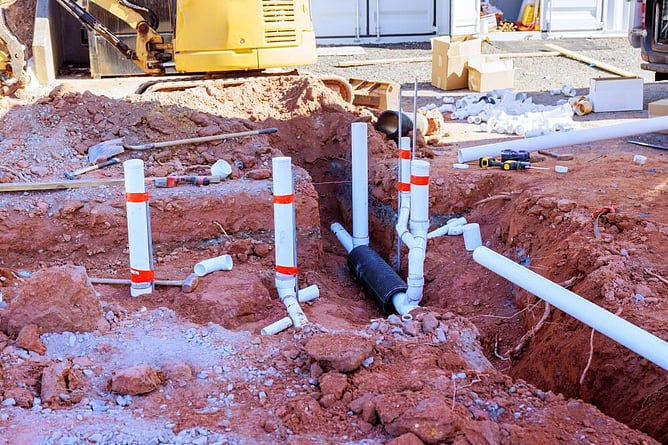
Before installing a fence, it makes sense to know where your underground services run. You don’t want fence posts positioned directly over important drainage infrastructure, and you also want to avoid creating an access problem if further work is required elsewhere on the property.
The same planning applies to gate locations. Think about how vehicles, trailers or maintenance equipment will enter the property now and in the future.
If you’re reaching the fencing stage of a residential project, talking with a specialist in fencing for Hamilton properties can help you plan the boundary, materials and access points around the rest of the completed site.
Ideally, the fencing contractor and drainage plan should be working from the same overall site layout rather than making decisions independently.
Leave landscaping until the heavy work is finished
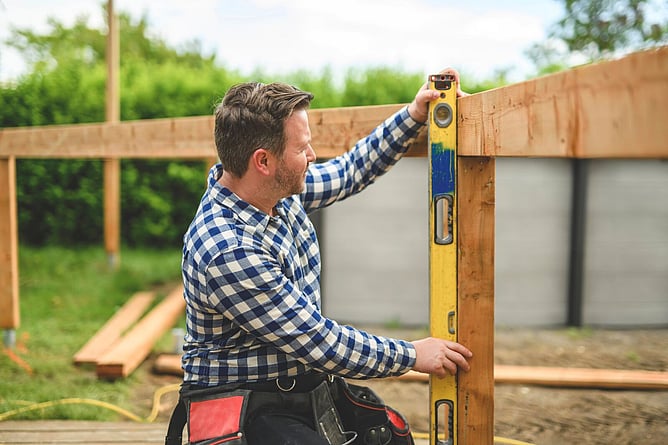
Landscaping can completely change the look of a new property, but it’s usually best saved until excavation and other heavy site works are complete.
There is little value in creating lawns, garden beds and planting areas if machinery still needs to cross them.
Final ground levels are also important for drainage.
Landscaping should work with the intended flow of surface water rather than unintentionally creating low spots or directing runoff towards the house. Gardens, retaining structures and paved areas can all influence how water moves around a section.
This is particularly relevant during wet Waikato weather, when poor falls or poorly planned outdoor areas can become much more obvious.
Once drainage, driveway preparation and major fencing work are complete, landscapers have a much clearer site to work with.
Don’t forget future access
Good property planning isn’t only about completing the build. It should also make the property easier to maintain.
Drainage systems may need to be inspected, cleaned, repaired or extended in the future. Wastewater treatment systems require appropriate access for servicing.
Try to avoid permanently building over important access points wherever possible.
That means thinking carefully about where you put:
Large decks
Concrete areas
Retaining walls
Garden structures
Fence posts
Sheds
Permanent landscaping
Knowing what’s underground before these features are installed gives you more flexibility later.
Keeping a copy of your site and drainage plans is also worthwhile. Years after construction, knowing where services run can make maintenance or future renovations much simpler.
A good sequence keeps the whole project moving
Every site is different, but a straightforward order for many Waikato new-build projects is:
Confirm the site layout and finished levels.
Plan drainage, stormwater and wastewater requirements.
Complete the main underground drainage work.
Backfill and prepare external ground levels.
Form driveways and other hard surfaces.
Install fencing and gates once underground services are confirmed.
Complete landscaping and final outdoor finishing.
Some stages will overlap depending on the builder and the property, but the principle stays the same: do the difficult underground and machine-access work before permanent surface features make the site harder to reach.
That approach can reduce double handling, keep trades out of each other’s way and leave the property ready for each stage of the build.
Planning a new build or property development in Waikato?
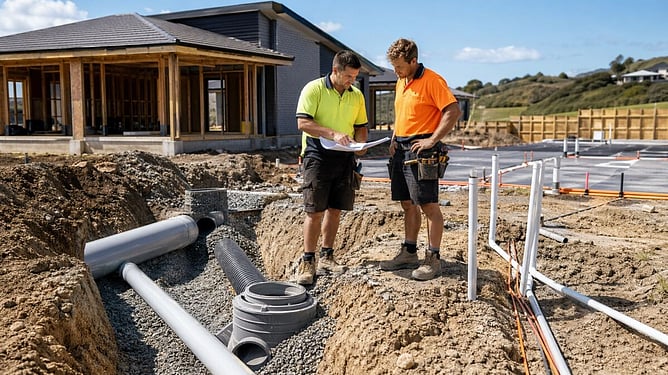
Good drainage starts well before the pipes go into the ground. Understanding the site, coordinating with other trades and completing the work in the right sequence can make the entire build easier.
DrainPro works with homeowners, builders and developers across Hamilton, Cambridge and the wider Waikato, providing new-build drainage, stormwater, septic and wastewater solutions.
If you’re planning a new home or property development in Waikato, contact the DrainPro team today to discuss your drainage requirements and get your site ready for the next stage.
Or get in touch with our Waikato Team now:
Phone: 021 074 5006
Email: james@drainpro.co.nz