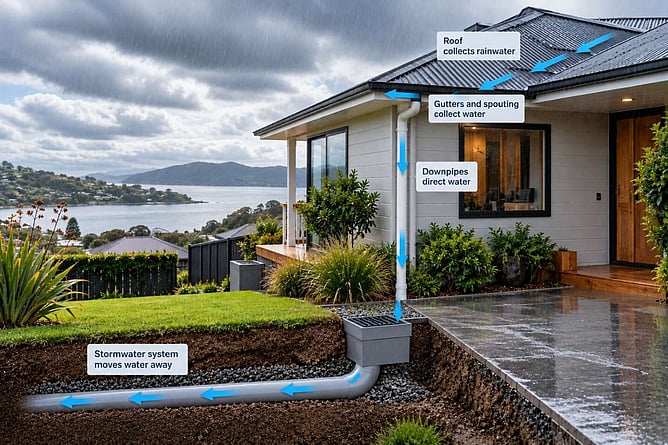
When heavy rain hits your property, there is an entire system working to move that water away from your home.
It starts at the roof, flows into gutters and downpipes, then continues through stormwater pipes or other approved drainage solutions. Drainlayers play an important role in ensuring the below-ground part of this system is properly installed and able to manage water effectively. When every part works together, rainwater can be managed efficiently. When one part is blocked, damaged, poorly positioned or disconnected, problems can quickly become noticeable.
For homeowners, understanding how water travels from the roof to the ground can make it much easier to identify potential issues and know which part of the system needs attention.
Rainwater Management Starts at the Roof
Your roof does more than keep the inside of your home dry. It also collects a considerable amount of rainwater and directs it towards the edges of the building.
From there, gutters or spouting collect the water and direct it towards downpipes.
That means effective property drainage actually starts above ground. If roofing, spouting or downpipes are not doing their job properly, the underground stormwater system may never receive the water in the way it was designed to.
Common problems can include:
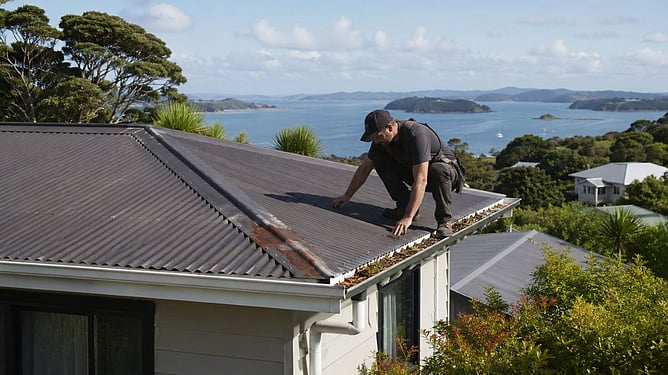
blocked gutters
leaking or damaged spouting
sagging gutter sections
blocked downpipes
poorly positioned downpipes
water overflowing near exterior walls
disconnected or damaged stormwater connections.
For homeowners dealing with ageing or inefficient gutters, properly designed gutters and spouting help collect roof water and move it towards the downpipes before the below-ground drainage system takes over.
Looking at the entire water path, rather than treating the roof and ground drainage as unrelated systems, makes it easier to understand why problems occur.
Downpipes Are the Link Between Roof and Ground
Downpipes have an important job: taking concentrated water from the roof drainage system and delivering it to the property’s stormwater system.
During light rain, a minor problem may not be particularly obvious. Heavy rain is often when weaknesses become easier to spot.
Water might spill over gutters, pool around a downpipe, discharge onto the ground or collect beside the house. In some situations, the above-ground components may be working correctly, but the underground stormwater drainage cannot move water away effectively.
That is why diagnosing rainwater problems requires looking beyond where the symptoms first appear.
An overflowing area beside a downpipe, for example, does not automatically mean the downpipe itself is at fault. There may be a blockage, damaged pipework or another drainage issue further downstream.
What Happens Once Rainwater Goes Underground?
Once roofwater enters the property’s stormwater drainage, it needs somewhere appropriate to go.
The exact solution depends on the property, local requirements, existing infrastructure and site conditions.
A stormwater system can involve pipework, pits, sumps, soakage solutions and connections to approved discharge points. New builds in particular need these components considered early because much of the drainage will eventually be buried beneath landscaping, paths, driveways and other finished areas.
Our guide to getting your drainlayer involved before site works begin explains why roofwater, hard surfaces, service routes and stormwater requirements should be considered together during the planning stages of a project.
Getting these details right before the property is finished can reduce the need to disturb completed areas later.
Watch Where Water Goes During Heavy Rain
One of the simplest ways homeowners can understand their property’s rainwater management is to observe what happens during a decent downpour.
You do not need to stand outside in dangerous weather. From a safe location, look for signs that water is not following the path it should.
You might notice gutters overflowing, water pouring from an unusual location, ponding beside the house, downpipes backing up or water collecting across paths and driveways.
Once the rain has passed, walk around the property and look for areas that remain unusually wet.
Persistent ponding, erosion, saturated ground or staining around exterior surfaces can all provide clues about how water is moving around the site.
The important point is to identify any patterns. For example, a puddle after exceptionally heavy rainfall does not necessarily indicate a major drainage problem, but water repeatedly collecting in the same unwanted location is worth investigating.
Hard Surfaces Change How Rainwater Moves
The roof is not the only part of a property generating stormwater.
Driveways, patios, paths and other hard surfaces prevent water from soaking directly into the ground where it lands. Instead, water moves across these surfaces and can become concentrated around low points.
This becomes particularly important when renovating or developing a property.
Adding a large driveway, extending a patio or changing ground levels can alter how water moves around the site. A drainage system that previously appeared adequate may be affected when the surrounding property changes.
Grated channels, stormwater pits and other drainage solutions may be used where appropriate to capture and manage surface water.
The objective is to consider the whole site rather than focusing exclusively on individual drains.
Landscaping Can Affect Drainage Too
Landscaping can improve a property considerably, but changes to ground levels can also change where rainwater travels.
Garden beds, retaining walls, lawns and paved areas can redirect water towards or away from the house. Soil conditions also influence how readily water can soak into the ground.
This is why drainage should ideally be considered before major landscaping is completed.
Installing underground drainage after paths, gardens and retaining walls are finished can be considerably more disruptive than planning those services at the beginning.
If you are undertaking a larger landscaping or renovation project, it is worth identifying existing stormwater infrastructure before making substantial changes to levels or hard surfaces.
New Builds Need Roofwater and Stormwater Coordination
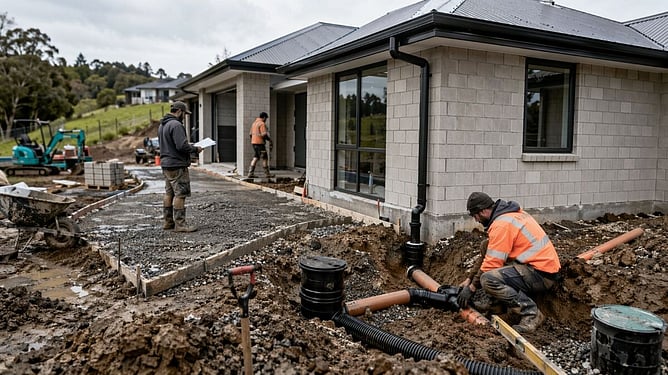
Rainwater management is particularly important during a new build because several different trades contribute to the finished system.
Roofers install roofing and associated rainwater components, while drainlayers manage the below-ground stormwater infrastructure. Builders coordinate the overall construction programme, and landscaping or driveway contractors can influence final surface levels.
These different parts need to meet in the right places.
Downpipe locations, stormwater connection points, finished ground levels and discharge requirements should therefore be understood before work becomes difficult to change.
Early coordination can help avoid situations where a downpipe ends up in an inconvenient location, underground services conflict with other site works, or completed surfaces need to be disturbed.
Don’t Ignore Repeated Water Problems
Some drainage problems are obvious, while others develop gradually.
A homeowner might become accustomed to a gutter overflowing in one location or a patch of lawn becoming waterlogged every winter. Over time, these problems can simply start to feel like part of the property.
Repeated water problems are worth investigating rather than automatically accepting that they’re normal.
Look out for things like:
recurring ponding around the house
overflowing gutters or downpipes
slow-draining stormwater points
unusually wet ground
erosion after heavy rain
water flowing towards the house
stormwater backing up during downpours.
Finding the cause is more useful than repeatedly dealing with the symptom.
Think of Rainwater Management as One Complete System
The easiest way to understand residential rainwater management is to follow the water.
Rain lands on the roof. Gutters collect it. Downpipes bring it towards ground level. Stormwater drainage then needs to carry or manage that water appropriately.
At the same time, driveways, paths, landscaping and ground levels influence what happens to rainfall across the rest of the property.
Every property is different, which is why effective drainage needs to account for the actual site rather than just one isolated pipe or problem area.
When roofing, gutters, downpipes, surface drainage and underground stormwater systems work together, homeowners are better placed to manage wet weather and reduce unwanted water around the property.
Need Help With Stormwater Drainage?
If rainwater is pooling around your property, your stormwater system is struggling during heavy rain, or you are planning drainage for a new build or renovation, DrainPro can help.
Our experienced drainlayers work across multiple regions of New Zealand on residential stormwater, drainage, new-build and wastewater projects.
Contact DrainPro today to discuss your property and find the right drainage solution for your site.
Email: office@drainpro.co.nz
Phone: 03 342 1278
We have branches in the following locations: