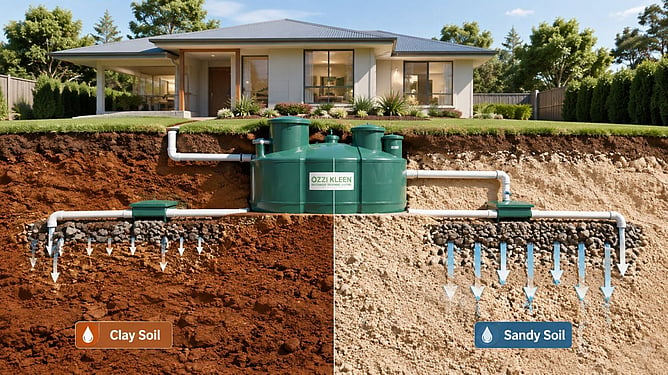
Choosing a septic system for a new build, subdivision or commercial project is not simply a matter of selecting a tank size and arranging installation. Soil conditions have a major influence on how wastewater can be treated and dispersed safely, and the right solution for one site may be completely unsuitable for another.
Clay and sandy soils sit at opposite ends of the drainage spectrum. Clay generally absorbs water slowly, which can increase the risk of saturation and surface ponding. Sandy soil typically allows water to move through much faster, which can create different concerns around treatment quality, groundwater and nutrient movement.
For builders, developers and project managers, this means septic planning needs to happen early. The tank, treatment process and disposal area should be designed as one complete wastewater system, with site conditions, expected loading and compliance requirements considered from the start.
Why Soil Type Matters When Designing a Septic System
Every on-site wastewater system eventually needs to discharge treated effluent somewhere. In many rural and semi-rural developments, that means distributing effluent into the surrounding soil through a disposal field, irrigation system or another approved land application method.
The way the soil accepts and moves water has a direct impact on how that disposal system should be designed.
A site with dense, heavy clay may hold water for long periods after rainfall. If wastewater is applied faster than the soil can absorb it, the disposal area may become saturated. At the other extreme, a highly permeable sandy site can allow wastewater to move through the ground very quickly, reducing the amount of additional treatment that occurs naturally within the soil profile.
Neither condition automatically makes a site unsuitable for on-site wastewater treatment. It does mean the wastewater system needs to be matched carefully to the ground conditions.
How Soil Permeability Affects Wastewater Disposal
Soil permeability describes how easily water can move through the ground.
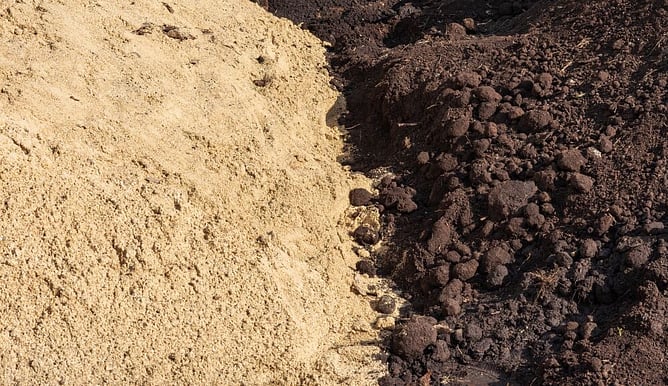
Sandy soils generally contain larger particles and more open pore spaces, allowing water to infiltrate relatively quickly. Clay contains much finer particles and tends to hold water for longer.
For wastewater design, infiltration rate matters because the land application area needs to accept treated effluent without becoming overloaded.
On clay-heavy sites, we need to be particularly careful about hydraulic loading. A disposal field that is too small, poorly positioned or loaded too heavily can struggle to disperse wastewater efficiently, especially during extended wet weather.
On sandy sites, the concern may be less about whether the water can enter the ground and more about how quickly it travels through the soil. We need to make sure the wastewater has received an appropriate level of treatment before it reaches deeper soil layers or groundwater.
Why the Tank and Disposal Field Must Be Designed Together
A common mistake is treating the septic tank as a standalone product.
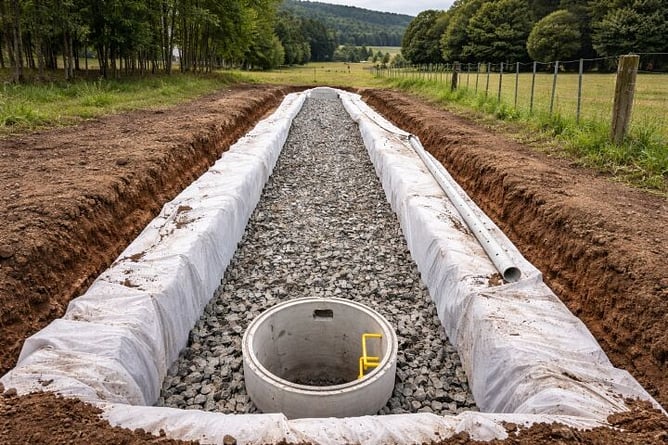
In practice, the tank is only one component of an on-site wastewater system. We also need to consider the treatment process, daily wastewater volume, soil characteristics, disposal method, site layout and environmental constraints.
For a simple site with favourable conditions, a conventional septic arrangement may be appropriate. On more challenging sites, an Aerated Wastewater Treatment system may provide a higher level of treatment and greater flexibility in how the effluent is distributed.
The correct choice depends on the project as a whole.
What Septic System Works Best in Clay Soil?
Clay soils often require more careful wastewater planning because they absorb and transmit water slowly.
This does not mean septic systems cannot work in clay. It means we need to pay much closer attention to how much treated effluent is being applied, where it is being applied and how evenly it is distributed across the available land.
Why Conventional Septic Systems Can Struggle in Heavy Clay
Conventional septic systems rely heavily on the disposal field and surrounding soil to manage and further treat wastewater after it leaves the tank.
Where clay is dense and infiltration rates are low, the soil may struggle to accept wastewater at the required rate.
Potential issues can include prolonged saturation, poor drainage after rainfall, surface ponding and reduced performance across the disposal area.
For a builder or developer, these issues can become more than a maintenance concern. They can affect site layout, consent requirements, land allocation and long-term project risk.
If the disposal area needs to be larger than originally anticipated, it may compete with other parts of the development such as driveways, landscaping, building platforms, accessways or future construction areas.
This is why we recommend establishing soil conditions before the wastewater system is specified.
Why Aerated Wastewater Treatment Can Suit Clay Sites
Aerated Wastewater Treatment systems can be a strong option where clay soils make conventional wastewater disposal more difficult.
Unlike a basic septic tank, an aerated system introduces oxygen into the treatment process. This supports biological activity that further breaks down wastewater before it is discharged to the land application area.
The result is higher-quality effluent than primary treatment alone.
For clay-heavy sites, that improved treatment can give us greater flexibility when designing the disposal method. Depending on the site and approved design, treated wastewater may be distributed through pressure-compensating irrigation, shallow subsurface systems or other land application methods that spread the hydraulic load more evenly.
That does not mean Aerated Wastewater Treatment is automatically the best solution for every clay site. We still need to assess soil depth, slope, groundwater, available land, loading rates and local regulatory requirements.
The advantage is that an aerated system gives us another option when the site requires a more advanced treatment approach.
What Septic System Works Best in Sandy Soil?
Sandy soil creates a very different wastewater design challenge.
Because sand generally drains quickly, it's easy to assume septic disposal will always be straightforward. In reality, very free-draining ground can require just as much attention as heavy clay.
Need help? Talk to our Drainpro team for drainage help.
Email: office@drainpro.co.nz
Phone: 03 342 1278
Why Fast Drainage Is Not Always an Advantage
The soil around a disposal field provides an additional layer of treatment as wastewater moves through it.
If effluent travels through the ground too quickly, there may be less opportunity for the soil to filter and further treat the wastewater before it reaches deeper layers.
This can become particularly important where groundwater is relatively shallow or where the site is close to streams, waterways, bores or other sensitive receiving environments.
For that reason, a sandy site still needs proper investigation. We need to understand not only how quickly the soil drains, but also how deep the groundwater sits, what separation distances are required and what level of effluent treatment is appropriate.
When a Conventional Septic System May Be Suitable
Where soil conditions are favourable, groundwater separation is adequate and wastewater loading is relatively straightforward, a conventional septic system may still be appropriate.
The key is making sure the full system is designed around the development, rather than assuming sandy ground will absorb whatever is discharged to it.
Expected daily wastewater volume needs to be calculated accurately, and the disposal field must be sized and positioned to suit both the soil and the project.
For a small rural development, the requirements may be relatively simple. For a commercial site, multi-dwelling development or high-use facility, the treatment requirements can be considerably more demanding.
When Aerated Wastewater Treatment Makes More Sense on Sandy Ground
Aerated Wastewater Treatment can also be valuable on sandy sites, particularly where environmental protection or higher wastewater loading is a priority.
Because an aerated system treats wastewater to a higher standard before land application, it can provide additional protection where the soil itself offers limited retention.
This may be particularly relevant on projects involving multiple dwellings, commercial operations, environmentally sensitive land or sites with tighter discharge requirements.
The important point is that sandy soil does not automatically mean a simpler septic system. The right treatment level still depends on the project's environmental and operational conditions.
Clay vs Sandy Soil: Key Septic Design Differences
Clay and sandy soils create very different wastewater design challenges, but both require a site-specific assessment before a septic system is selected.
Clay Soil
Clay soil typically has a slow infiltration rate, which means wastewater can take longer to move through the ground. The main concern is usually saturation, poor drainage and the risk of the disposal area becoming overloaded.
Because of this, disposal field design often requires careful control of wastewater loading and distribution. Site testing is essential so we can understand how the soil behaves and determine whether a conventional system is suitable.
Aerated Wastewater Treatment is often worth considering on clay sites because the higher level of treatment can provide more flexibility in how treated effluent is distributed.
Sandy Soil
Sandy soil generally has a fast infiltration rate, which creates a different set of considerations. Rather than worrying primarily about saturation, we need to consider whether treated effluent could move through the soil too quickly.
Disposal field design may require greater attention to treatment quality, groundwater levels and environmental separation distances. Site testing is just as important on sandy ground, even when drainage appears favourable.
Aerated Wastewater Treatment may also be beneficial on sandy sites, particularly where wastewater loading is higher or where groundwater and environmental conditions require a higher treatment standard.
Soil Type Is Only One Part of the Decision
In both clay and sandy soils, the tank should not be chosen based on soil type alone. We also need to consider wastewater volumes, groundwater conditions, available land, disposal requirements, site layout and local compliance requirements.
This is the distinction we encourage project teams to keep in mind. The best septic system is the one designed around the complete site, not simply whether the ground contains clay or sand.
Talk to our team at Drainpro for a quote on your wastewater project.
Why We Recommend Soil Testing Before Septic System Selection
We prefer to understand the site before locking in the wastewater system.
That reduces the risk of designing around assumptions that later turn out to be inaccurate.
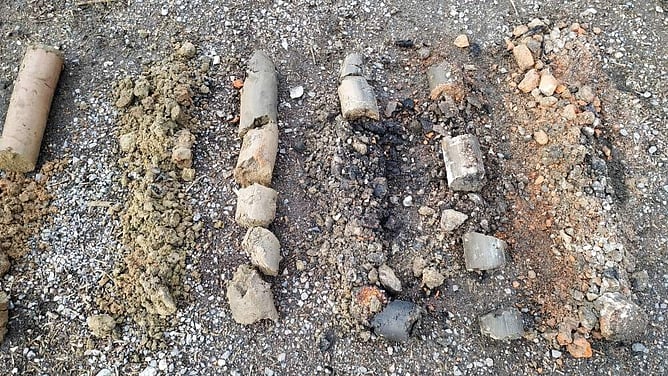
Percolation testing and soil investigation can help establish how readily the ground accepts water and whether a standard disposal system is likely to perform as required.
For builders and developers, this information is valuable early in the project because it can influence layout, service planning, earthworks and consent documentation.
What a Percolation Test Tells Us
A percolation test helps us understand how quickly water can move through the soil.
This gives us useful information when determining whether a conventional disposal field is appropriate or whether an alternative system should be considered.
On a clay site, slow percolation can indicate that a larger disposal area, lower loading rate or more advanced treatment approach may be required.
On sandy ground, rapid infiltration may prompt further consideration around groundwater, treatment quality and separation distances.
The test itself is not the only factor, but it forms part of the site information we use when assessing the wastewater design.
What Else We Assess Before Designing the System
Soil type is important, but it is not the only consideration.
We also look at the site profile, slope, available disposal area, expected wastewater volume, development size, groundwater conditions, installation access and local compliance requirements.
Building position can also have a major effect on wastewater planning.
Once foundations, driveways, retaining walls and landscaping are locked into the site plan, options for a disposal area can become limited. That is why wastewater design is generally easier to resolve early rather than trying to fit it around a finished layout.
How the Wrong Septic Design Can Affect a Building Project
For B2B projects, poor wastewater planning can create costs well beyond the septic system itself.
The biggest problems often appear when the wastewater design is treated as a late-stage service rather than part of the overall site strategy.
Unexpected Redesigns and Consent Delays
If soil testing shows that the originally proposed wastewater system is unsuitable, plans may need to be changed.
That can affect drawings, engineering documentation, service layouts and consent applications.
In some cases, the disposal area may need to be repositioned or enlarged. If that space has already been allocated to another part of the development, the project team may need to revisit the wider site design.
Resolving these issues early is considerably easier than dealing with them once construction is underway.
Larger-Than-Expected Disposal Areas
Clay sites can be particularly sensitive to available land area because slow-draining soil may require wastewater to be distributed across a larger area.
That space needs to be protected from inappropriate development and heavy vehicle loading.
For developers working with tighter sites, this can directly influence yield and layout.
Understanding the wastewater footprint early helps avoid designing buildings, roads or other infrastructure into an area that later needs to remain available for effluent disposal.
Additional Earthworks and Installation Costs
Ground conditions also affect installation.
Heavy clay can be difficult to excavate and may hold water during construction. Sandy soils can create their own issues with trench stability and ground support.
Access for machinery also needs to be considered.
If installation is left until late in the construction programme, we may be forced to work around completed landscaping, restricted access or other services. Early coordination usually allows wastewater infrastructure to be installed more efficiently.
Long-Term Liability From Poor System Selection
The project does not end at handover.
A wastewater system that is poorly matched to the site can create ongoing maintenance issues for the eventual property owner, commercial operator or body corporate.
For developers and contractors, that can create unnecessary reputational risk.
A properly designed system should account for realistic wastewater loading, soil conditions and long-term servicing requirements from the start.
What Builders and Developers Should Confirm Before Ordering a Septic Tank
Before committing to a tank or treatment system, we recommend confirming several key details.
The project team should know what soil conditions exist across the proposed disposal area, whether percolation or soil testing has been completed and what wastewater volume the development is expected to generate.
Groundwater conditions also need to be understood, particularly on highly permeable sites.
Available land for disposal should be identified and protected within the site layout.
We also need to confirm whether the project requires primary treatment or a higher treatment standard such as Aerated Wastewater Treatment.
Council requirements, consent conditions and installation access should be reviewed before equipment is ordered.
Getting these decisions right before construction starts can prevent redesigns, programme disruptions and unplanned costs later.
Which Septic Tank Should We Use for Your Site?
There is no single tank that is best for every clay site or every sandy site.
On clay ground, the main challenge is usually managing slow infiltration and preventing the disposal area from becoming overloaded.
On sandy ground, the issue can be the opposite. Wastewater may move through the soil quickly, which increases the importance of treatment quality and appropriate groundwater protection.
In both cases, we need to consider the tank, treatment system and land application area as one integrated wastewater solution.
Aerated Wastewater Treatment can be particularly valuable where the site requires a higher level of treatment, more controlled effluent distribution or greater design flexibility. It can suit both clay and sandy sites when the wider project conditions justify it.
The most reliable approach is to assess the ground conditions, expected wastewater loading, available land and project constraints before selecting the system.
If you are planning a new build, subdivision, rural development or commercial project, resolving the wastewater design early can help avoid unnecessary changes later in the programme.
We can assess the site, complete the required testing and help specify and install a wastewater solution that suits both the ground conditions and the development.
Talk to our Drainpro team now!
Email: office@drainpro.co.nz
Head Office Phone: 03 342 1278
We have branches in the following areas: